
What To Do After a Car Accident in Vancouver:
A Step-by-Step Guide
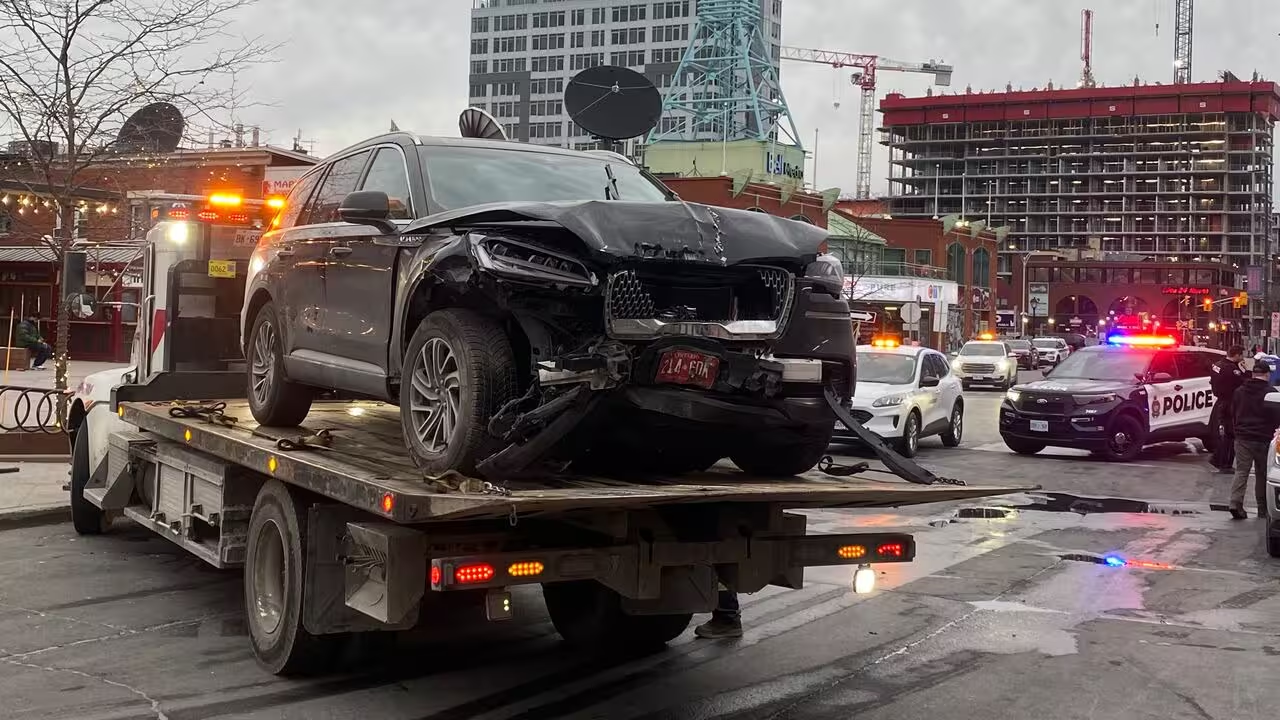
Nobody plans to be in a car accident. But on Vancouver’s roads — the rain-slicked lanes of Highway 1 near Brunette Avenue, the bumper-to-bumper crawl on the Ironworkers Memorial Bridge, or the sudden stops on the Queensborough connector — accidents happen every single day.
If you’ve been in a car accident in Vancouver, the first few minutes matter more than you think. Staying calm and following the right steps can protect your safety, your insurance claim, and your legal standing. Here’s exactly what to do after a car accident in Vancouver.
Step 1: Stop and Stay Safe
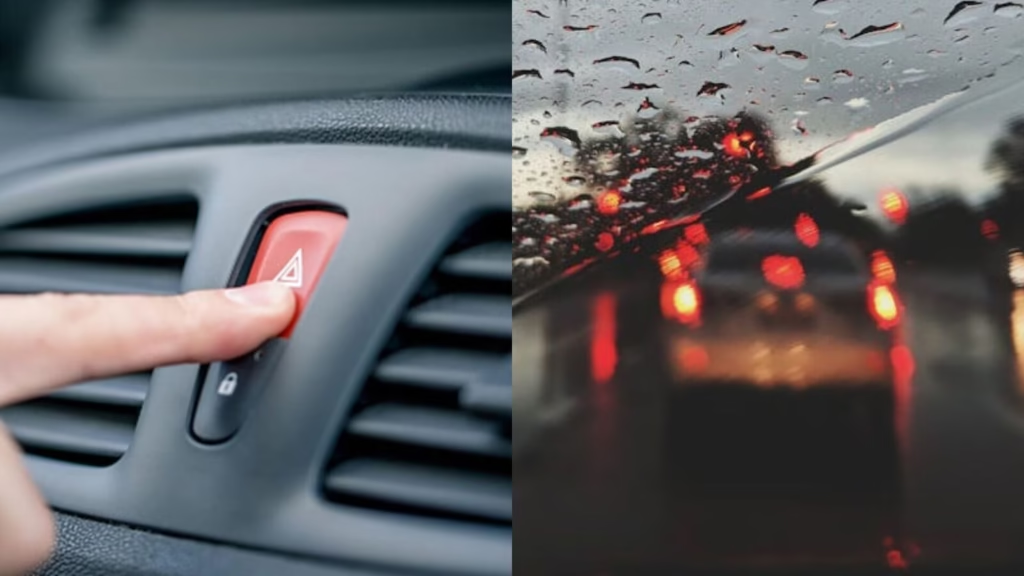
British Columbia law requires all drivers involved in a collision to stop immediately. Do not drive away — even from a minor fender bender.
Your first priority is safety, not damage assessment:
- Turn on your hazard lights immediately
- If the vehicle is driveable and creating a hazard, move it to the shoulder — on busy corridors like Highway 1 near the Willingdon interchange or the Alex Fraser Bridge approaches, a stopped vehicle in a live lane is extremely dangerous
- If the car cannot move safely, stay inside with your seatbelt on until traffic clears, then exit away from traffic
- Set up road flares or warning triangles if you have them
Step 2: Check for Injuries
Before anything else, check yourself, your passengers, and the other driver for injuries.
- Call 911 immediately if anyone is hurt, unconscious, or trapped
- Do not attempt to move someone with a potential head or neck injury unless they are in immediate danger
- In Greater Vancouver, BC Ambulance typically responds within 8–12 minutes in urban areas — stay on the line with dispatch
Even if you feel fine, some injuries — whiplash, internal trauma — don’t show symptoms for hours. See a doctor the same day.
Step 3: Secure the Scene and Call Police
In BC, you must report any accident involving injury, a fatality, or damage exceeding $10,000 to police. For accidents on busy routes like Highway 1, Highway 99 approaching the Massey Tunnel, or the Trans-Canada through Burnaby, the RCMP or Vancouver Police Department will often respond to major scenes automatically.
For minor collisions with no injuries, you are not required to wait for police — but you must report to ICBC.
Step 4: Document Everything
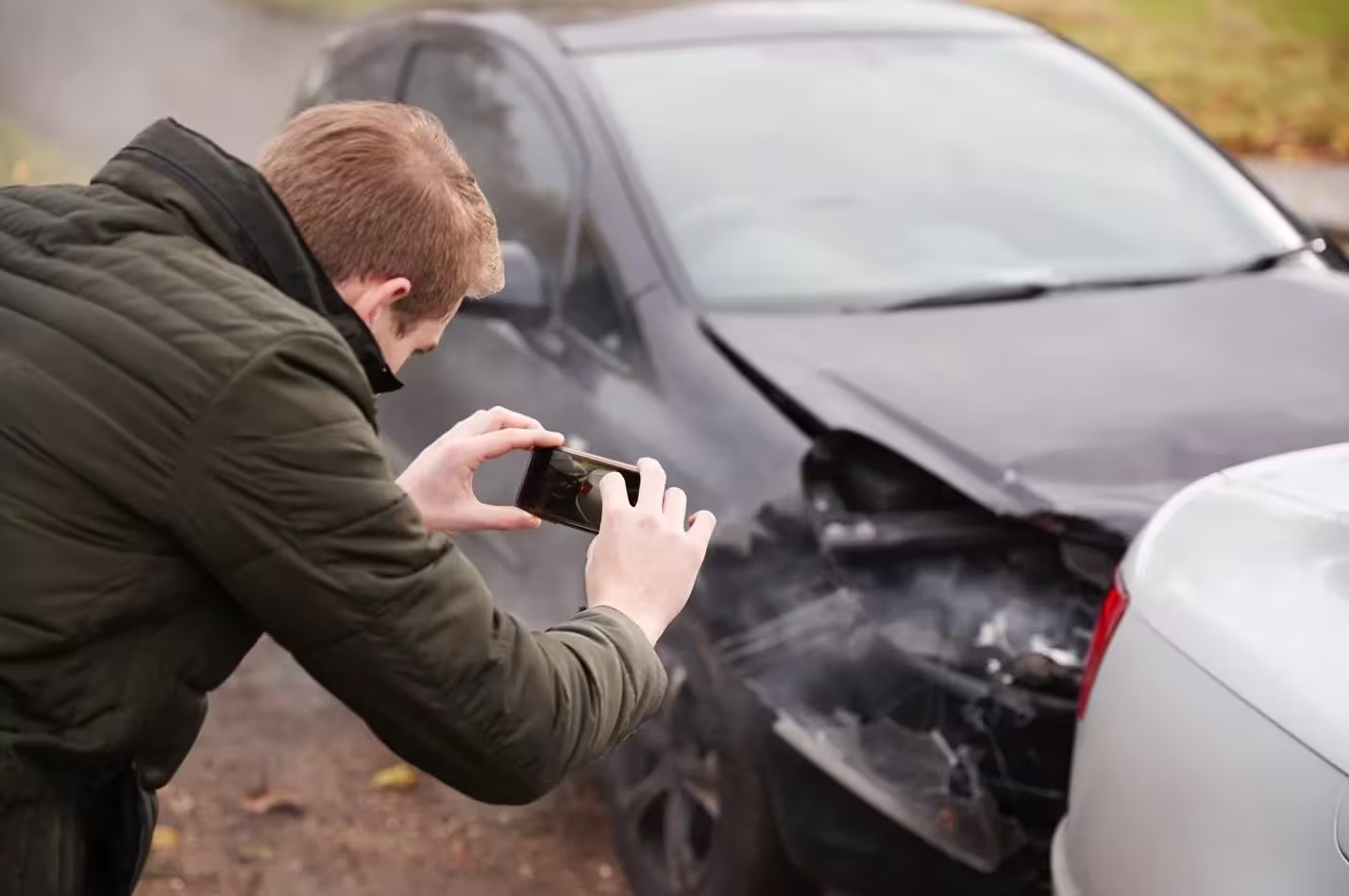
This is where most people make costly mistakes. Pull out your phone and document before vehicles are moved if possible:
- Photograph: vehicle positions, all damage, license plates, road conditions, skid marks, traffic signs, and weather
- Note the time and exact location — “westbound Highway 1, just past Gaglardi Way exit” is far more useful to ICBC than “somewhere in Burnaby”
- Collect from the other driver: full name, phone number, driver’s license number, license plate, insurance company, and ICBC policy number
- Speak to witnesses — get their contact info before they leave the scene
Do not admit fault, apologize, or speculate about what happened. Anything you say can be used in the claims process.
Step 5: ICBC Accident Report
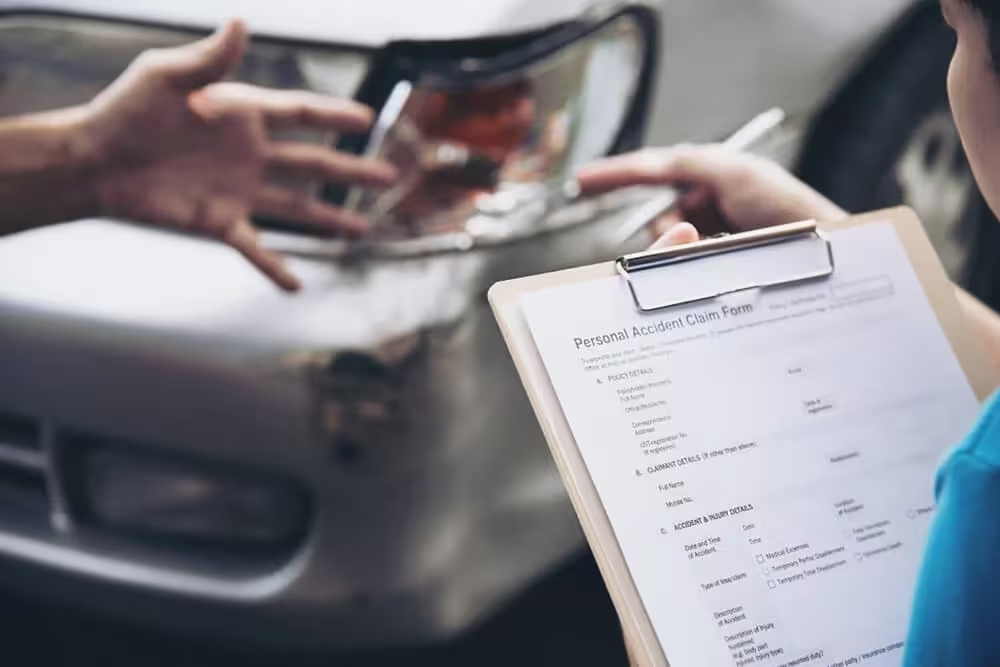
British Columbia operates under a no-fault insurance system through ICBC. You must report your accident — regardless of fault — within 24 hours.
How to report:
- Online at icbc.com
- By phone: 1-800-910-4222 (available 24/7)
- In person at any ICBC claim centre
ICBC will assign you a claim number and advise on next steps including vehicle inspection, rental coverage, and repair authorization. Keep this number — you’ll need it for everything that follows.
Step 6: Arrange a Tow — The Right Way
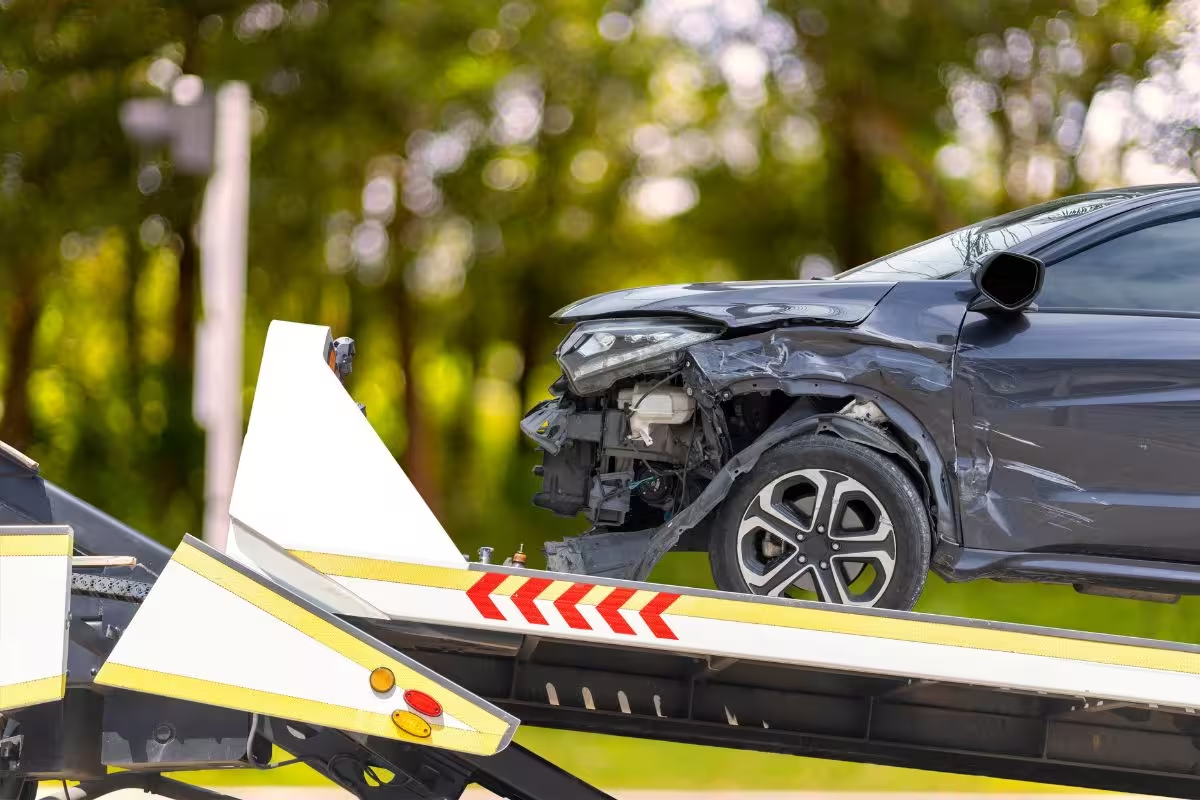
If your vehicle is not drivable, you need a tow truck. But not all tow operators are equal, and in the stress of an accident, making the wrong call can cost you.
What to look for in an accident recovery tow:
- Flatbed capability — after a collision, wheel-lift towing can cause additional drivetrain damage, especially on all-wheel drive and electric vehicles
- 24/7 availability — accidents don’t wait for business hours
- Licensed and insured — your ICBC claim may require documentation from a licensed operator
- Local knowledge — a driver who knows the difference between a Burnaby side street and a Port Mann Bridge recovery situation will handle your scene faster and safer
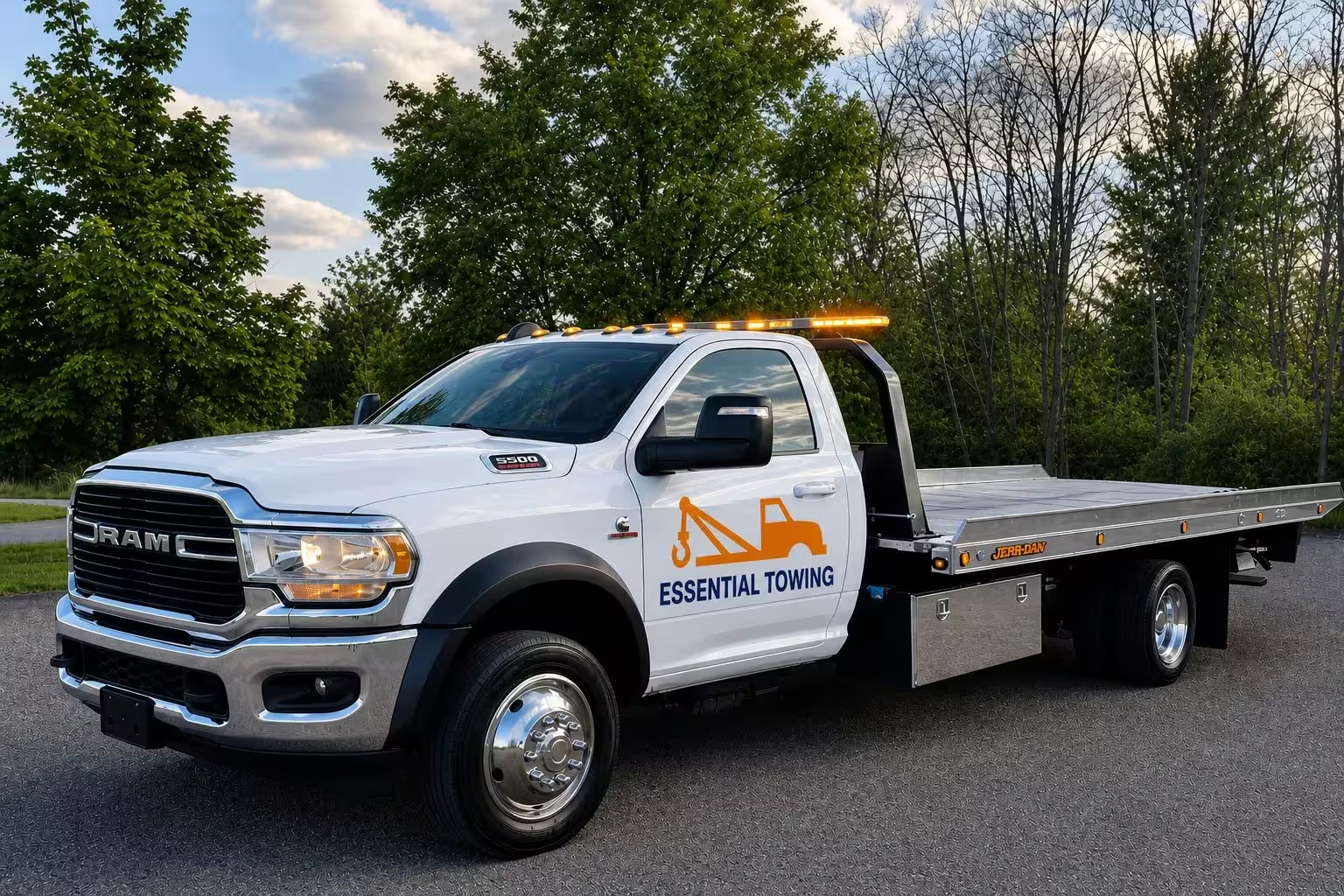
Essential Towing operates 24 hours a day, 7 days a week across Vancouver, Burnaby, Surrey, Langley, Delta, and the entire Lower Mainland. Our certified operators are equipped with flatbed trucks for accident recovery and handle every vehicle type — including EVs and luxury cars — with full insurance coverage on every job. One call to (604) 800-7579 and we dispatch immediately.
Step 7: Follow Up on Your Health and Claim
The days after an accident matter too:
- See your family doctor or walk-in clinic even if you feel fine — document everything for potential ICBC injury claims
- Keep all receipts related to the accident — towing, rental vehicles, medical visits
- Follow up with ICBC within 10 days if you haven’t heard back on your claim
- Take photos of your vehicle at the repair shop before work begins
A Final Word
A collision is one of the most stressful experiences a driver can have. The roads in and around Vancouver — from the congested Trans-Canada through Coquitlam to the fog-prone George Massey corridor — can turn a normal commute into a nightmare in seconds.
You can’t control that. But you can control how you respond.
Stay calm. Follow these steps. And know that when your vehicle needs to be moved, Essential Towing is already on the way.
Available 24/7 across Greater Vancouver. Call (604) 800-7579 for immediate dispatch.