
What Causes a Dead Battery in Vancouver’s Summer Heat (And How to Prevent a Tow)
Dead battery summer Vancouver calls are more common than most drivers expect — and they almost always come as a complete surprise. But here’s what the auto industry knows that most drivers don’t: summer heat kills more batteries than cold weather ever does.
If your car has been sitting through a BC heatwave and suddenly won’t start — you’re not alone. Every summer, our dispatch team sees a spike in battery boost calls across Vancouver and Burnaby the moment temperatures climb above 28°C.
This guide explains exactly why it happens, how to spot the warning signs before you’re stranded, and what to do if your battery dies on a hot summer day.
Table of Contents
Dead Battery Summer Vancouver — Why Summer Heat is Harder Than Winter
Cold weather slows a battery down — but heat actively destroys it from the inside.
Car batteries work through a chemical reaction between lead plates and sulphuric acid electrolyte fluid. When temperatures exceed 25°C, that reaction accelerates — causing the fluid to evaporate faster, corroding the internal plates, and permanently reducing the battery’s capacity.
Here’s the cycle that strands drivers every summer:
- A heatwave hits and temperatures sit above 30°C for several days
- Your battery’s electrolyte fluid evaporates under the hood (which can reach 70–90°C)
- The internal plates corrode and the battery loses capacity silently
- The internal plates corrode and the battery loses capacity silently
- Next morning — nothing
The cruel part: you get no warning. The battery was “fine” the day before. Summer failures tend to be sudden, while winter failures are more gradual.

The 5 Warning Signs Your Battery is Struggling
Sudden failures are common — but if you know what to look for, you can catch a dying battery before it leaves you stranded.
1. Slow engine crank
When you turn the key or press start, the engine takes longer than usual to turn over. That laboured “rrr-rrr-rrr” before it starts is a classic early sign.
2. Dashboard warning light
The battery icon on your dashboard isn’t just for decoration. If it appears while driving, your charging system or battery has an active problem.
3. Dimming headlights or interior lights
Lights that dim when you start the car, or flicker at idle, indicate the battery isn’t holding a consistent charge.
4. Electrical components behaving oddly
Power windows moving slowly, infotainment systems restarting, or the AC cutting out intermittently can all point to a struggling battery.
5. Battery older than 3 years
Most car batteries last 3–5 years in BC’s climate. If yours is approaching that range and you’re heading into summer, get it tested before the heat hits.
Situations That Drain a Hot Battery Even Faster
Even a healthy battery can fail faster in summer when combined with these common habits:
- Short trips — the alternator doesn’t fully recharge the battery on drives under 15 minutes
- Leaving AC running while parked — a massive drain that compounds heat damage
- Phone chargers and USB devices left plugged in — small but constant parasitic drain overnight
- Parking in direct sun all day — hood temperatures can exceed 80°C, accelerating fluid loss
- Older vehicles with higher electrical loads — more systems drawing from the same aging battery

What to Do When Your Battery Dies in the Heat
If you turn the key and nothing happens on a hot day, here’s exactly what to do:
Step 1 — Stay safe first
If you’re in traffic, put your hazards on and move to the shoulder or a parking lot if possible. Do not leave your car in an active lane.
Step 2 — Check the obvious
Make sure your headlights weren’t left on. A fully drained battery from lights left on can sometimes recover slightly once everything is off.
Step 3 — Call for a battery boost
If you have jumper cables and a willing driver nearby, a jump start can get you going temporarily. However, if the battery failed due to heat damage, it will likely die again — sometimes within the same day.
Step 4 — Get it tested
After a boost, drive directly to a mechanic or auto parts store for a free battery load test. This tells you whether the battery recovered or needs immediate replacement.
Step 5 — If you’re stuck and can’t get a boost
Call a roadside assistance service. A professional battery boost in Vancouver or Burnaby typically arrives within 30 minutes and costs far less than a tow.
“If you’re dealing with a dead battery summer Vancouver response times from roadside services are typically under 30 minutes.”
How to Prevent a Summer Battery Failure
These steps take less than 30 minutes and can save you from being stranded this summer:
Get a free battery test now
Most Canadian Tire, Lordco, and NAPA locations test your battery for free. Do it before the heat peaks — not after it fails.
Park in shade whenever possible
Reducing hood temperature by even 10–15°C meaningfully extends battery life over a summer.
Reduce parasitic drain
Unplug phone chargers when the car is off. Turn off the AC before you shut the engine down. These small habits add up.
Check your battery terminals
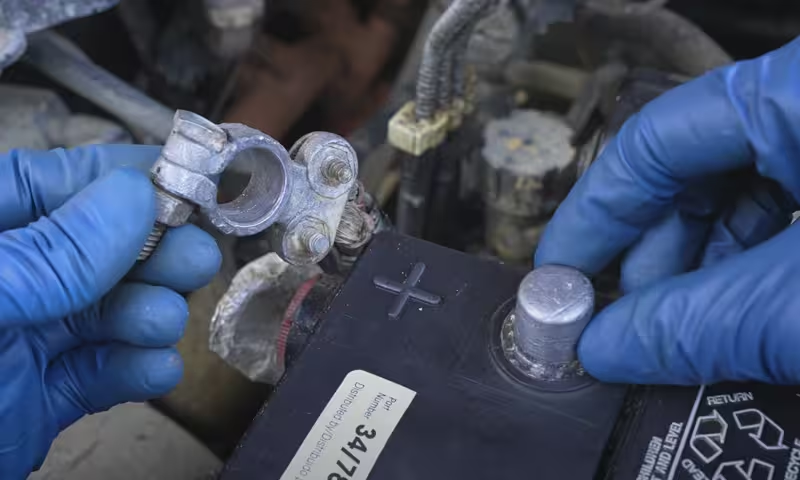
White or blue corrosion on the battery terminals increases resistance and makes failure more likely. Clean them with a wire brush or ask a mechanic to do it during an oil change.
Replace proactively if it’s over 4 years old
A battery replacement costs $150–250. A tow, missed appointment, and lost time costs considerably more.
You can get a free battery test at most Canadian Tire locations before the heat peaks.
Essential Towing — Battery Boost Service in Vancouver & Burnaby
If your battery dies this summer, Essential Towing provides fast battery boost service across Vancouver, Burnaby, Surrey, and Metro Vancouver — 24 hours a day, 7 days a week, including holidays.
We typically arrive in 30 minutes or less, get you started, and can advise on whether your battery needs replacement before you’re stranded again.
 Call us anytime: (604) 800-7579
Dead battery summer Vancouver? Essential Towing dispatches immediately…
 Learn more about our Roadside Assistance services
Essential Towing serves Vancouver, Burnaby, Surrey, Richmond, North Vancouver, Delta, and all of Metro Vancouver.